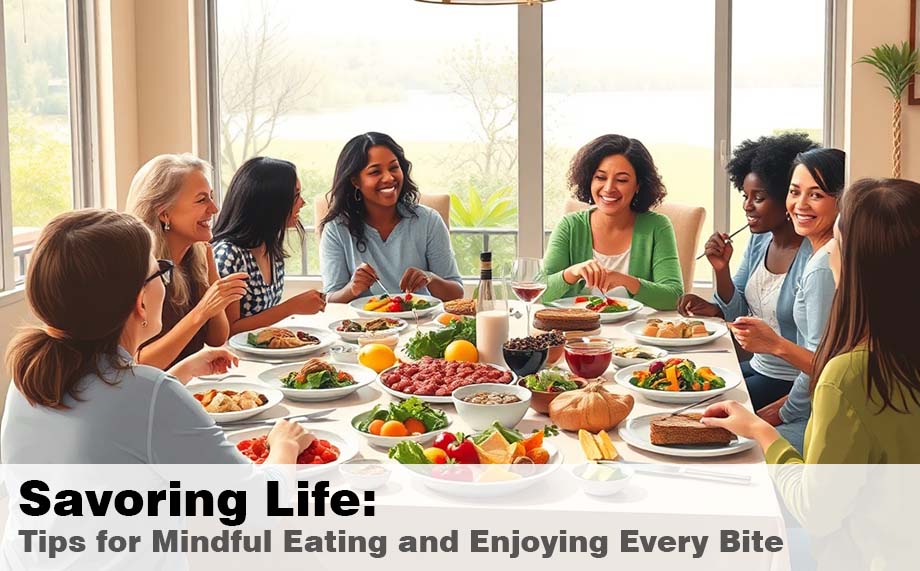
In a world that often celebrates speed and multitasking, meals have become something we rush through — eaten in front of screens, between meetings, or on the go. Yet food is meant to be more than fuel; it’s one of life’s greatest pleasures and a daily opportunity to slow down, connect, and savor the moment.
Mindful eating isn’t about strict diets or counting calories. It’s about building a healthier, more joyful relationship with food — one where you truly enjoy every bite, listen to your body, and nourish both your body and mind.
Here’s how to rediscover the joy of eating with mindfulness and presence.
Eat with All Your Senses
Before taking your first bite, pause and notice.
Look at the colors on your plate — the greens, reds, and golds. Smell the aroma that tells your body, “Something good is coming.” Listen to the crunch, the sizzle, the gentle sounds of nourishment.
When you engage your senses, eating becomes an experience, not just a habit. You slow down, appreciate the food before you, and find satisfaction in the moment — often with less food than you might expect.
Try this: Before you eat, take a deep breath, observe your meal, and say quietly, “Thank you.” Gratitude helps you tune in and enjoy your food on a deeper level.
Slow Down and Be Present
It takes about 20 minutes for your brain to register fullness — but in our fast-paced lives, many of us finish meals in half that time. When you slow down, you give your body time to signal when it’s satisfied, helping prevent overeating and bloating.
Take smaller bites. Chew thoroughly. Set down your fork between bites.
Pro tip: Eat without distractions. Turn off the TV, put down your phone, and focus on your meal. You’ll be amazed how much more enjoyable your food becomes when your attention isn’t divided.
Listen to Your Body’s Signals
Mindful eating means trusting your body — it already knows what it needs.
Learn to notice true hunger versus emotional hunger. Are you eating because you’re hungry, or because you’re stressed, bored, or sad? If it’s emotional, consider taking a walk, journaling, or breathing deeply before reaching for food.
Ask yourself:
- Am I truly hungry right now?
- What am I craving — nourishment or comfort?
- How do I feel after I eat this food?
When you honor your body’s cues, you’ll naturally find balance without deprivation.
Celebrate the Pleasure of Food — Without Guilt
Many people have been taught to label foods as “good” or “bad,” which often leads to guilt and restriction. Mindful eating replaces guilt with gratitude.
You can enjoy a slice of cake or a piece of chocolate without shame — as long as you savor it intentionally. Eat slowly. Notice the flavor, the texture, the joy it brings. Then stop when you’re satisfied, not stuffed.
When you remove judgment from food, you build trust in yourself and enjoy a healthier relationship with what you eat.
Create an Atmosphere of Calm
Your environment plays a significant role in how you eat and how you experience your meals. By consciously setting the scene for your dining experience, you can transform even the simplest meals into moments of joy and mindfulness.
Consider setting your table beautifully, even if it’s just for one. Light a candle, play soft music, and create an atmosphere that invites you to savor your food. A calm environment helps lower stress levels, allowing your body to absorb more nutrients and enjoy the flavors fully.
Even busy lunches can become more mindful with small adjustments. For instance, try eating outdoors, where fresh air and natural light can elevate your mood. Stepping away from your desk can help you disconnect from work stress, giving you space to appreciate your food.
By cultivating a nourishing eating environment, you foster a deeper connection to your meals and promote healthier eating habits. This intentional approach not only enhances your physical well-being but also enriches your overall dining experience, making each meal a celebration of nourishment and mindfulness.
Connect with Where Your Food Comes From
One of the most powerful parts of mindful eating is gratitude — for the journey your food took to reach your plate.
Think about the farmers, the earth, the rain, and the hands that made your meal possible. When you feel connected to your food, eating becomes a form of appreciation, not consumption.
Simple practice: Before eating, pause and say a silent “thank you” to everyone and everything involved in the creation of your meal.
Eat What Makes You Feel Good — Inside and Out
Pay attention to how different foods make you feel. Notice which ones give you energy, improve your mood, or make you feel heavy or sluggish.
Your body is always communicating — you just have to listen.
The goal isn’t to eat “perfectly,” but to find balance. Choose foods that make you feel nourished, strong, and joyful.
Mindful Portions, Not Restrictions
You don’t need to give up your favorite foods; instead, you can enjoy them in moderation. Mindful eating naturally encourages portion control because it allows you to be present with your food, helping you recognize when you’ve had enough.
One effective strategy is to use smaller plates. This simple change can create the illusion of a fuller plate, tricking your mind into feeling satisfied with smaller portions. Serving food mindfully—taking the time to look at, appreciate, and savor each item on your plate—can enhance your eating experience and promote a deeper connection to what you consume.
Celebrate your favorite dishes without guilt, and enjoy the journey of nourishing yourself with awareness and intention. Through this approach, you’ll cultivate a healthier mindset around food, leading to greater satisfaction and well-being.
Practice Gratitude After Every Meal
When you finish eating, take a moment to reflect on how your body feels — nourished, full, content. Appreciate the nourishment your meal provided and how it supports your energy and well-being.
This small act of gratitude strengthens your connection to food and helps shift your mindset from “eating to fill” to “eating to nourish.”
🌿 Final Thought: Eating as a Form of Self-Love
Mindful eating isn’t about control — it’s about connection. It’s a way of saying:
“I care about how I feel. I honor my body. I choose presence.”
When you eat with awareness and gratitude, every meal becomes an act of self-care.
You start to savor life — not just through food, but through every moment. Because the way you eat is often the way you live: rushed and distracted, or calm and intentional.
So slow down. Taste your food. Enjoy the moment.
You deserve to savor every bite — and every beautiful part of life. 🍋💛




Leave a Reply